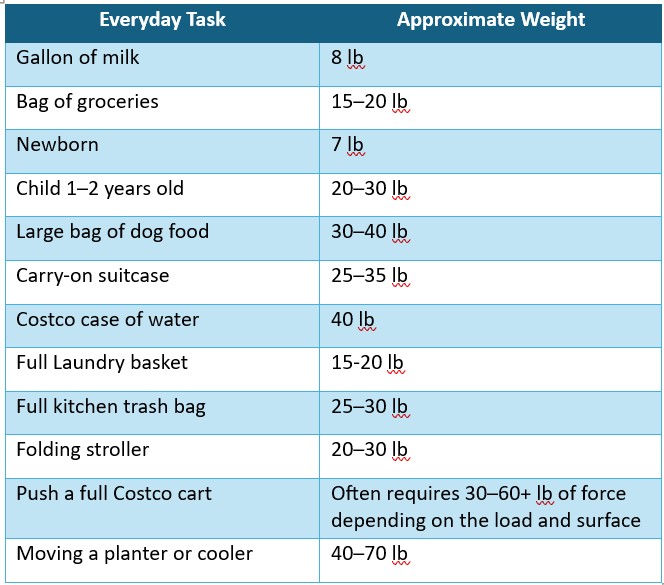
As we were selecting weights for an exercise one day in class, a member said "Well you know, a gallon of milk is 8 pounds." I couldn't believe it! And haven't stopped thinking about it since. Most people don't realize they're lifting weights every single day.
By
Maryann Youssef
August 1, 2026
Don’t miss another article
Thank you! Your submission has been received!
Oops! Something went wrong while submitting the form.
Related
Maryann Youssef
•
August 1, 2026
As we were selecting weights for an exercise one day in class, a member (shout out to Judy) said “Well you know, a gallon of milk is 8 pounds.”
I couldn’t believe it! And haven’t stopped thinking about it since.
Most people don't realize they're lifting weights every single day.
When people hear the words strength training, they often picture barbells, dumbbells, or bodybuilders.
But here's the truth: Life doesn't care whether you've been to the gym! It simply demands you to be strong enough to keep up.
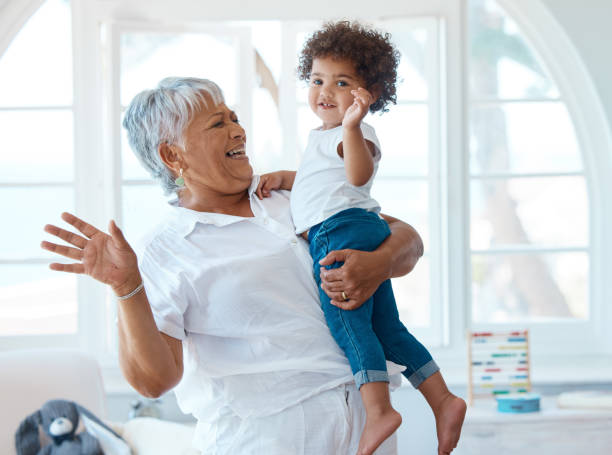
Strong enough to lift a grandchild.
Strong enough to carry groceries.
Strong enough to climb stairs.
Strong enough to catch yourself if you trip.
Strong enough to remain independent for decades.
Life Is Heavier Than You Think
As I was, most people are surprised at the numbers.
The average person thinks of a 30- or 40-pound dumbbell as "heavy,” yet they'll wrestle a 35-pound bag of dog food into the trunk.
They'll carry two grocery bags in one hand.
They'll pick up a grandchild who weighs 28 pounds.
They'll drag a heavy suitcase through the airport.
The difference?
Those aren't considered "exercise."
They're just life.
Strength training isn't about lifting heavy in the gym. It's about making life feel lighter outside the gym.
The question isn’t:
"How much can you bench press?"
The better question is:
"How strong does your life require you to be?"
If you're only training with 5-pound dumbbells, you're not preparing your body for the things you already do every week.
Here's the Problem
Life doesn't get lighter as we get older.
If anything...
The same grocery bags feel heavier.
The stairs become steeper.
The suitcase becomes harder to lift.
Getting off the floor becomes slower.
The challenge isn't that life changes. The challenge is that we lose muscle if we don't intentionally work to keep it.
After about age 30, adults naturally begin losing muscle mass. Along with muscle, we gradually lose power, bone density, balance, and the ability to recover quickly from a stumble. That process accelerates after menopause.
None of those changes happen overnight. They're gradual—which is exactly why they're easy to miss until everyday tasks suddenly feel much harder.
"But I Walk Every Day."
First...Walking is wonderful. Please don’t stop! We encourage it.
Walking improves cardiovascular health, helps regulate blood sugar, supports mental health, and keeps us moving.
But walking only asks your muscles to do one thing: Move your body from Point A to Point B.
Walking doesn't ask you to:
Lift something heavy.
Push.
Pull.
Carry.
Squat.
Reach overhead.
Catch yourself when you lose balance.
Those are different physical abilities that need to be trained in order to be learned or maintained.
Imagine trying to improve your vocabulary by reading only one word every day. You're still reading but you're not developing the full language.
Your body works the same way.
Walking is one important "word."
Strength is another.
Balance is another.
Power. Mobility. Coordination. Endurance, etc. Healthy aging requires all of them.
Why Strength Matters More Than Ever After 50
When we talk about strength, we're not talking about becoming a powerlifter. We're talking about gradually and strategically building enough strength that everyday life feels easier.
Research consistently shows that strength training can:
Preserve muscle as we age.
Improve bone density.
Reduce the risk of falls.
Improve balance.
Make joints more resilient.
Improve insulin sensitivity.
Help people remain independent longer.
Increase confidence in everyday movement.
Perhaps most importantly, strength gives you options.
It lets you say "yes"!
Yes to hiking with your family.
Playing on the floor with your grandchildren.
Traveling.
Gardening.
Moving furniture.
Living your life without wondering if your body can handle it.
Strength Isn't About the Gym
This is the part many people miss. Strength training isn't about lifting heavy in the gym. It's about making life feel lighter outside the gym. The goal isn't to become better at lifting weights. The goal is to become better at living!
Ask Yourself...
Can I comfortably:
✓ Carry all my groceries in one trip?
✓ Lift my suitcase into the overhead compartment?
✓ Pick up my grandchild without hesitation?
✓ Get off the floor without using my hands?
✓ Climb several flights of stairs confidently?
✓ Carry a 40-pound bag of dog food?
If any of those give you pause, you don't need an easier life – You need a stronger body.
The Bottom Line
Strength isn't measured by the dumbbell you lift in class. It's measured by how confidently you live when class is over! Don't train for punishment, don't train to see how exhausted or sore we can become.